
Paul Walker – My 30 Years at YBC
Few people can claim to have shaped York Biotech Campus (YBC) quite as profoundly as Paul Walker. From sponsoring the original development programme and helping to design the campus, to relocating his family back to Yorkshire to oversee its operation and growth, Paul has spent more than three decades championing YBC.
As he prepares to retire after a career spanning more than 40 years in public service, he reflects on the journey that brought him to Yorkshire and the evolution of a campus he helped build from the ground up.
Building for the future
Paul’s involvement with YBC began long before the first scientists moved onto the campus. Having built a reputation as a specialist in designing scientific facilities through his work across hospital trusts and central government, he was asked to be the technical development sponsor for a new Central Science Laboratory (CSL) campus. CSL would later become The Food and Environment Research Agency (Fera), creating a centre for nationally important agricultural, food and environmental science.
As Sponsor, Paul took overall responsibility for the engineering design and delivery of the new campus, acting as the key interface between government stakeholders, scientists, architects, engineers and contractors. He oversaw the project through detailed design, construction and commissioning, ensuring the facilities met the demanding requirements of world-leading scientific research. Following completion of the campus, Paul was asked to relocate from Croydon with his family to take on responsibility for its operation and development.
Paul said that operating the campus offered a fresh perspective which shaped the rest of his career. “Designing laboratories is one thing, running them revealed just how important reliability, resilience and flexibility were to the science taking place inside.”
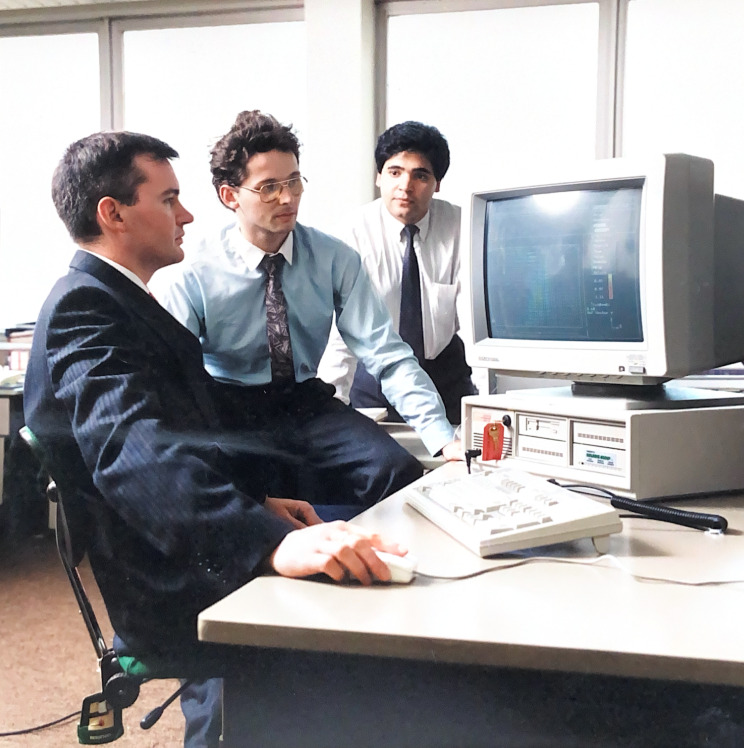
Thirty years of evolution
While YBC marks its 30th anniversary this year, Paul sees its history as one of continuous evolution. In his view, “the building isn’t the end goal, the science is.”
Throughout his career, Paul travelled extensively, visiting some of the world’s leading scientific facilities to exchange knowledge, learn from international peers and support the development of new facilities. Bringing these insights back to the UK helped ensure YBC remained at the cutting edge of laboratory design, technology and operational best practice.
Every design choice in the build was considered. Paul laughed, when he remembered a conversation with the architects, who said the roof would reflect the sky to blend into the design: “we’re in Yorkshire, that’s why it looks grey!”
His biggest hope for the campus for the next thirty years is that the campus continues to attract ambitious scientists, engineers and businesses while remaining flexible, and supporting scientific challenges collaboratively.
A career of service
To get to this point, Paul’s journey began in 1975 as an NHS engineering apprentice before progressing through further study to become a Chartered Engineer, a route he credits with shaping the practical, problem-solving approach that would define his career.
Much of that career was spent in the UK Civil Service, where a commitment to public service remained at the heart of his work. Describing his motivation as “supporting science to support the country”, Paul spent more than four decades helping to deliver and maintain nationally significant scientific facilities. Most recently, he provided the technical assurance for the new National Biosecurity Centre, transforming APHA’s animal health facility in Weybridge, Surrey. Purpose, he says, was always a driving force, and he never felt he lacked it throughout his career.
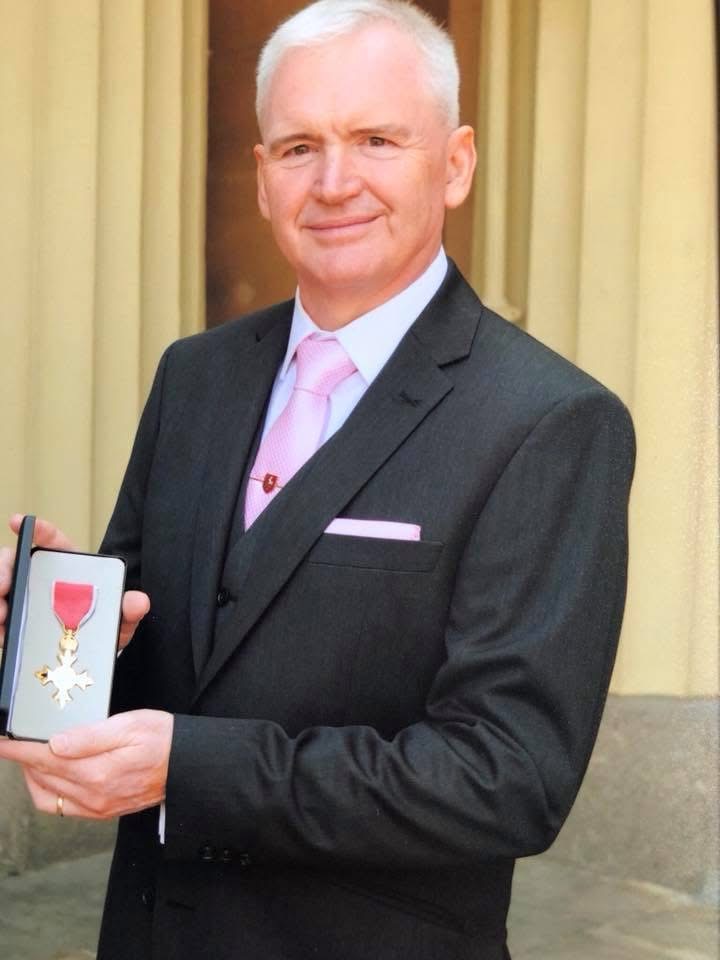
In 2018, his contribution to engineering was recognised with an OBE. While the honour came as a complete surprise, Paul is quick to emphasise that he never viewed it as an individual achievement. Instead, he sees it as recognition of all the teams he worked alongside to deliver and operate facilities that continue to support vital research across the UK. In his own words, “I’ve spent my career looking forward and building for the future. Receiving the OBE was the first time I really stopped to look back and reflect on what we’d achieved.”
More than buildings
Ask Paul about the most memorable part of his career and his answer is not a building. Instead, he talks about people.
While the campus has grown and evolved over the past three decades, in both name and purpose, Paul believes its greatest achievement lies in the people it has brought together and the important work it has enabled. For him, one of the strengths of YBC is that it allows organisations to become part of something bigger than themselves. Whether home to a start-up business or a global enterprise, the campus creates an environment where ideas, expertise and innovation can be shared.
As he prepares for retirement, it is the people he knows he will miss most. Paul has always enjoyed helping scientists turn ideas into reality, and the opportunity to work alongside talented colleagues, scientists, researchers and innovators, is what he reflects on most fondly.
Although Paul is planning to retire to Spain and hopes to spend more time with his family and on the golf course, he insists that engineering is unlikely to disappear from his life completely. In the latter years of his career, he has become increasingly fascinated by the adoption of AI and the benefits it brings to the industry. He hopes to remain involved in the occasional engineering project after retirement, and his passion for the profession and interest in its ongoing developments show no signs of fading.